
Understand your Islamic obligations before selling an inherited property by consulting with a knowledgeable imam or Islamic scholar about proper inheritance distribution according to Sharia law, ensuring all eligible heirs receive their prescribed shares before proceeding with any sale. Obtain a Certificate of Appointment of Estate Trustee (probate) through Ontario courts or the equivalent in your province, which typically takes 4-8 weeks and establishes your legal authority to manage the deceased’s assets. Engage a real estate lawyer familiar with both Canadian estate law and Islamic finance principles who can guide you through title transfers while respecting your religious requirements for interest-free transactions.
Connect with Islamic financial advisors who specialize in halal investment options for inheritance proceeds, as many Canadian Muslims face uncertainty about managing sudden wealth in accordance with their faith. Request a professional home evaluation to establish fair market value, ensuring equitable distribution among heirs and preventing family disputes that often arise during emotionally challenging times. Consider appointing a family representative or mediator from your local mosque community to facilitate transparent communication among all beneficiaries throughout the selling process.
Document all decisions and distributions meticulously, as Canadian tax authorities require detailed estate records while Islamic principles demand accountability in managing others’ rightful shares. Many families have successfully navigated this journey by combining Canadian legal requirements with their faith values, transforming a difficult transition into an opportunity for family unity and spiritual growth.
Understanding Islamic Inheritance Laws in a Canadian Context
How Canadian Law Treats Inherited Property
When a loved one passes away, their property becomes part of their estate and must go through a legal process before it can be transferred or sold. In Canada, this process is called probate, and understanding it helps you navigate this emotionally challenging time with confidence.
Probate is the court’s way of confirming that a will is valid and granting the executor legal authority to manage the deceased’s assets. The executor—often a family member—carries significant responsibilities, including identifying all assets, paying outstanding debts and taxes, and distributing property according to the will or, if no will exists, according to provincial intestacy laws. For Muslim families, this is the stage where you’ll work to ensure both Canadian legal requirements and Islamic inheritance principles are honored.
Each province handles probate differently, which directly affects timelines and costs. British Columbia, Ontario, and Nova Scotia charge probate fees based on the estate’s value, while Alberta and Quebec have minimal or no fees. Quebec operates under a unique civil law system where notarial wills can bypass probate entirely. Saskatchewan and Manitoba fall somewhere in between. These variations significantly impact Canadian real estate markets and your selling timeline.
The probate process typically takes several months to over a year, depending on the estate’s complexity. During this period, the executor must obtain a Certificate of Appointment (or Letters Probate) before selling inherited property. Many Muslim families find working with legal professionals who understand both Canadian law and Islamic principles particularly helpful during this transition, ensuring the process respects cultural values while meeting legal obligations.
Balancing Religious Obligations with Legal Requirements
Navigating the intersection of Islamic inheritance principles and Canadian law requires thoughtful planning and clear communication. While Canadian probate courts recognize testamentary freedom, many Muslim families successfully honor Islamic distribution guidelines by working with estate lawyers familiar with cross-cultural matters.
Consider proactive estate planning that documents your wishes clearly. Creating a will that reflects Islamic inheritance shares (such as the specific portions designated for sons, daughters, spouses, and parents) helps prevent confusion later. Many Canadian Muslims find that combining spiritual guidance with professional legal advice ensures both religious obligations and legal requirements are met.
When selling an inherited house, transparency among family members is essential. Hold family meetings to discuss how proceeds will be distributed according to Islamic principles, ensuring all heirs understand their entitlements. Some families consult Islamic scholars alongside estate attorneys to verify distribution calculations align with Shariah requirements.
For future generations, document your intentions while you’re able. Work with professionals who respect cultural diversity and understand that Islamic inheritance isn’t negotiable for observant Muslims. This preparation reduces family conflict and ensures smooth estate administration. Remember, proper planning demonstrates care for your loved ones and upholds both your faith commitments and Canadian legal responsibilities.

Navigating Family Decisions and Multiple Heirs
When Siblings or Extended Family Co-Inherit
When multiple family members inherit a property together, navigating the decision to sell requires patience, open communication, and mutual respect. In many Muslim families, this situation involves siblings, spouses, or extended relatives who each have legitimate stakes in the outcome.
Start by organizing a family meeting where all co-inheritors can share their perspectives. Some may wish to keep the property for sentimental reasons or rental income, while others may need their share of the proceeds for personal circumstances. Creating a safe space for these discussions honors the Islamic values of consultation (shura) and family unity.
Consider appointing a neutral family member or trusted community elder to facilitate conversations if tensions arise. Many Canadian Muslim communities have experienced mediators who understand both Islamic principles and Canadian legal frameworks. These individuals can help bridge different viewpoints and guide families toward consensus.
Document all agreements in writing, even among close family members. This protects everyone’s interests and prevents misunderstandings later. Your lawyer can formalize these arrangements to ensure they’re legally binding under Canadian law.
If consensus proves difficult, professional mediation services offer structured approaches to resolve disputes. Some families have found success working with mediators familiar with multicultural dynamics who can navigate both Canadian legal requirements and Islamic inheritance principles.
Remember that seeking fairness and maintaining family relationships aligns with Islamic teachings. One family from Mississauga shared how their initial disagreements transformed into a collaborative process once they focused on honoring their parents’ legacy together, ultimately strengthening their bonds while successfully selling the inherited home.
Handling Disagreements with Compassion and Fairness
When siblings or family members disagree about selling an inherited property, Islamic teachings offer a compassionate framework for resolution. The Quran emphasizes consultation (shura) and justice in family matters, encouraging respectful dialogue and mutual understanding. Begin by gathering all heirs for an open discussion, allowing each person to voice their concerns and preferences without interruption. This approach mirrors the Islamic principle of seeking consensus while honoring individual rights.
If direct conversations don’t resolve the matter, consider engaging a mediator who understands both Canadian legal processes and Islamic values. Many mosques and Islamic community centers across Canada offer family mediation services through trained volunteers who can guide discussions with cultural sensitivity. Organizations like the Canadian Council of Imams and the Islamic Social Services Association provide resources for conflict resolution that respect religious principles.
Remember that navigating family disagreements requires patience and good character, much like building positive habits in other aspects of life. Approach each conversation with the intention of preserving family relationships while finding fair solutions.
If mediation doesn’t succeed, Canadian legal options include partition applications through the courts, though this should be a last resort. Provincial legal aid offices can explain your rights, and many offer services in multiple languages to serve diverse communities. The goal is always to reach an agreement that honors both Islamic inheritance principles and maintains family harmony, recognizing that preserving relationships holds value beyond any property’s worth.
Preparing the Inherited Home for Sale

Essential Repairs and Presentation Tips
Before listing your inherited property, focus on repairs that offer the best return on investment. Canadian buyers typically expect well-maintained homes with functional systems. Priority repairs include fixing leaky faucets, patching wall damage, ensuring all light fixtures work, and addressing any safety concerns like loose railings or faulty smoke detectors.
A fresh coat of neutral paint can transform spaces affordably while appealing to diverse buyer preferences. Clean or replace worn carpets, and ensure bathrooms and kitchens sparkle, as these rooms significantly influence purchasing decisions.
Decluttering is essential in Canadian real estate marketing. Remove personal items, family photos, and religious artifacts to help potential buyers envision their own families in the space. This doesn’t diminish your loved one’s memory but rather respects the sales process. Consider donating items to local Islamic charities or community members who could benefit.
Many Canadian Muslim families have found success by seeking advice from community members who’ve navigated similar situations. Real estate agents familiar with multicultural communities can provide valuable insights into local buyer expectations and current market trends.
If the inherited property needs significant work, obtain multiple quotes from licensed contractors. Sometimes selling as-is might be more practical than investing in major renovations, especially when multiple heirs are involved in decision-making. Balance cost-effectiveness with presenting the home in its best possible condition.
Working with Real Estate Professionals Who Understand Your Values
Finding a real estate professional who respects your values can make the selling process smoother and less stressful. Look for realtors who have experience working with diverse communities and demonstrate cultural awareness. Many Canadian cities have real estate professionals who understand the unique considerations Muslim families face during property transactions.
When interviewing potential agents, ask about their experience with estate sales and family-involved decisions. Inquire how they handle situations requiring extended family consultation, as Islamic inheritance often involves multiple beneficiaries. A good realtor will be patient with your decision-making timeline and respect the need for family consensus.
Be upfront about your priorities from the first meeting. If you need to avoid interest-based financing arrangements or require flexible showing times around prayer schedules, communicate this clearly. Discuss your preferences regarding gender considerations during home showings if this matters to your family.
Request references from other Muslim clients or community members who have worked with the agent. Personal recommendations from your mosque or community center can be invaluable. Some realtors actively participate in cultural competency training and welcome the opportunity to learn about specific requirements.
Remember, the right professional will view your values as an asset to the relationship, not a complication. They should demonstrate genuine interest in understanding your needs and work collaboratively to achieve your goals while honoring your Islamic principles.

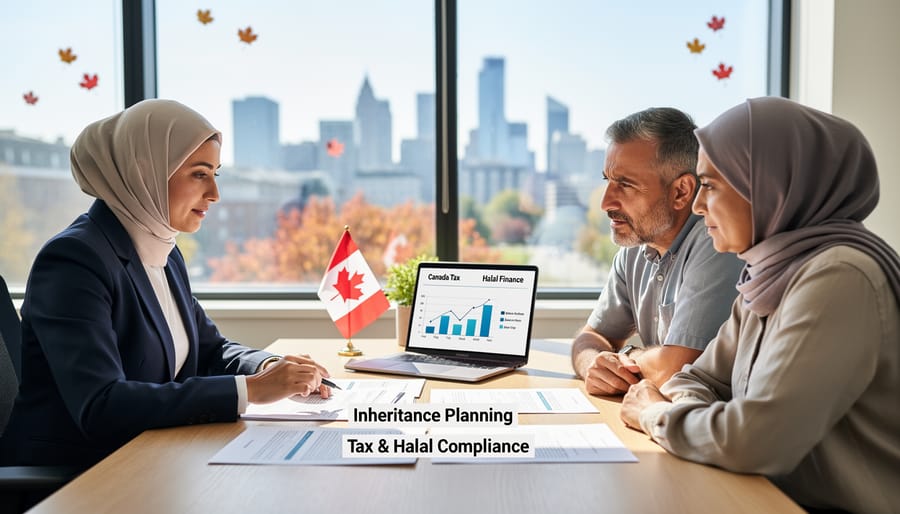
Understanding the Financial and Tax Implications
Capital Gains Tax on Inherited Property in Canada
When you inherit property in Canada, understanding capital gains tax is essential for making informed decisions. The good news is that if the property was the deceased’s principal residence throughout the period of ownership, it may qualify for a complete exemption from capital gains tax. This exemption can provide significant relief to families during an already challenging time.
Capital gains tax applies when the property’s value has increased between the date of inheritance (or the deceased’s date of death) and the date of sale. You’re only taxed on 50% of the capital gain, which is then added to your taxable income for the year. For example, if the inherited property gained $100,000 in value after inheritance, you would include $50,000 in your taxable income.
The principal residence exemption is particularly important to understand. If your loved one lived in the property as their primary home, the estate may claim this exemption, potentially eliminating capital gains tax entirely. However, timing matters – gains that occur after the date of death but before the sale may still be taxable unless you also designate it as your principal residence.
Provincial differences exist primarily in how property transfer taxes are applied, though capital gains tax itself is federally regulated. Some provinces offer additional relief for family transfers, which can ease the financial burden.
Many Muslim families navigating this process have found success by consulting with accountants familiar with both Canadian tax law and Islamic financial principles, ensuring their decisions align with both legal requirements and religious values.
Ensuring Halal Handling of Sale Proceeds
Once you’ve successfully sold your inherited property, handling the proceeds in a halal manner becomes your next important responsibility. Islamic principles require that wealth be managed ethically and distributed fairly among rightful heirs according to Sharia law.
First, avoid placing sale proceeds in interest-bearing accounts, even temporarily. While most Canadian banks offer interest on savings accounts, this conflicts with Islamic prohibition of riba (interest). Instead, consider opening a non-interest-bearing chequing account specifically for managing these funds during the distribution process. Some Canadian financial institutions now offer Islamic banking options that comply with Sharia principles, making it easier to handle large transactions without compromising your faith.
When distributing funds among heirs, consult with an Islamic scholar or imam familiar with inheritance law to ensure proper allocation. Islamic inheritance follows specific formulas outlined in the Quran, which may differ from Canadian intestacy laws. Having professional guidance helps you fulfill both religious obligations and legal requirements simultaneously.
Consider working with Islamic financial advisors who understand halal investment principles if heirs wish to invest their portions. Canada has a growing number of Muslim financial professionals who can recommend Sharia-compliant options like equity-based investments, real estate, or Islamic mutual funds that avoid interest, alcohol, gambling, and other prohibited sectors.
The Muslim community in Canada has successfully navigated these waters before you. Many mosques and Islamic centers offer financial counseling services that can guide you through halal handling of substantial inheritances. Remember, seeking knowledge and proper guidance demonstrates respect for both your faith and your family’s legacy, ensuring the blessings from this inheritance remain pure and beneficial for all recipients.
The Selling Process: Timeline and Key Steps
From Listing to Closing: What to Expect
Understanding the timeline helps you plan effectively while managing family expectations and fulfilling Islamic obligations. The process typically unfolds in four distinct phases.
The market assessment phase takes one to two weeks. Your real estate agent will evaluate your property’s condition, review comparable sales in your neighbourhood, and recommend a competitive listing price. This is an ideal time to consult with family members involved in the inheritance to ensure everyone agrees on the approach.
Once listed, homes in active Canadian markets typically remain on the market for 15 to 45 days, though this varies by location and season. Toronto and Vancouver markets often move faster, while smaller communities may take longer. During this period, your agent handles showings and provides regular updates.
When offers arrive, the negotiation phase begins. This can take anywhere from a few hours to several days, depending on market conditions and whether multiple offers are received. Your agent will guide you through evaluating offers, considering not just price but also conditions and closing dates.
After accepting an offer, the closing period usually spans 30 to 90 days. During this time, the buyer arranges financing, completes inspections, and their lawyer reviews title documents. Your lawyer will ensure all probate requirements are met and coordinate the final transfer. Many Muslim families find comfort in having their lawyer present at closing to ensure proper distribution of proceeds according to Islamic inheritance principles.
Required Documentation and Legal Paperwork
Navigating the paperwork after losing a loved one can feel overwhelming, but having a clear checklist helps ensure a smooth property transfer process. Start by obtaining multiple certified copies of the death certificate, as you’ll need these for various institutions. The probate certificate, issued by the court, confirms the executor’s authority to manage the estate and is essential for transferring property ownership.
Gather identification documents for all heirs entitled to inheritance according to Islamic principles and Canadian law. This includes government-issued photo ID and social insurance numbers. You’ll also need the original property deed, recent property tax statements, and any existing mortgage documents.
Request property transfer forms from your provincial land registry office. In Ontario, this is the Land Transfer Tax Statement, while British Columbia uses different provincial forms. Your real estate lawyer will guide you through completing these correctly.
Consider obtaining a property appraisal to establish fair market value, which helps with equitable distribution among heirs and tax purposes. If the deceased had a will, ensure it’s accessible. Many Muslim families find that working with professionals familiar with both Islamic inheritance principles and Canadian requirements eases this transition significantly, honoring both religious obligations and legal responsibilities.
Community Resources and Support
Finding Trusted Professionals in Your Community
Finding professionals who understand both Canadian real estate laws and Islamic principles can make the inheritance process significantly smoother. Start by reaching out to Canadian Muslim communities through your local mosque, Islamic center, or community organizations. Many congregations maintain informal networks of trusted professionals who have successfully helped families navigate similar situations.
Ask for personal referrals from friends, family members, or community leaders who have recently handled estate matters. Their firsthand experiences can guide you toward lawyers familiar with Islamic inheritance distribution, accountants knowledgeable about estate taxes, and real estate agents sensitive to family dynamics during difficult transitions.
Consider contacting Islamic finance organizations or halal investment groups, as they often have connections to culturally competent professionals. Professional associations like the Canadian Bar Association maintain directories where you can search for lawyers by specialty and language.
When meeting potential professionals, don’t hesitate to ask about their experience with Muslim clients and understanding of Islamic principles. The right professionals will respect your religious obligations while ensuring full compliance with Canadian legal requirements.
Emotional and Practical Support During Difficult Times
Inheriting a property often comes during times of loss, and the Muslim community understands the importance of coming together during these challenging moments. Reach out to your local mosque or Islamic centre, which can connect you with grief counsellors familiar with Islamic perspectives on bereavement. Many communities offer specialized support groups where members share their experiences navigating estate matters while honouring both Canadian legal requirements and Islamic principles.
Organizations like the National Council of Canadian Muslims and local Muslim family services provide resources on estate planning and property management. Don’t hesitate to ask for help from community support networks that have helped countless families through similar transitions. Your imam, community elders, or trusted advisors can offer valuable guidance on balancing emotional needs with practical decisions. Remember, accepting support isn’t a sign of weakness but a reflection of our communal values. Many Canadian Muslims have successfully navigated these challenges and found strength in sharing responsibilities with family members and community resources during difficult transitions.
Selling an inherited house is more than a financial transaction—it’s an opportunity to honor the memory of your loved one while securing your family’s future in Canada. By approaching this process with both practical wisdom and spiritual mindfulness, you demonstrate respect for Islamic principles of fairness and family responsibility while fulfilling your obligations under Canadian law.
Remember, you don’t have to navigate this journey alone. The Canadian Muslim community offers valuable support networks, from knowledgeable real estate professionals who understand your cultural values to Islamic financial advisors who can guide inheritance distribution according to Shariah. Take time to communicate openly with family members, ensuring everyone feels heard and respected throughout the decision-making process.
Whether you choose to sell quickly or maintain the property temporarily, moving forward with clarity and confidence comes from proper preparation. Seek guidance from qualified professionals, involve your family thoughtfully in key decisions, and trust that balancing Islamic values with Canadian legal requirements is not only possible but an opportunity for personal growth.
Your loved one’s legacy lives on through the choices you make today. By handling this responsibility with care, integrity, and faith, you’re building a stronger foundation for generations to come while contributing positively to the diverse fabric of Canadian society.