
Generation Z Muslims in Canada are rewriting the rules of community engagement, blending digital fluency with authentic Islamic values to demand transparency, inclusivity, and action from community organizations. Born into a world of instant messaging, social media activism, and global connectivity, this generation communicates through platforms and formats that older community members often struggle to navigate. They expect dialogue, not monologue. They share their experiences through Instagram stories and TikTok videos rather than formal newsletters. They organize campaigns in Discord servers and WhatsApp groups instead of traditional committee meetings.
This shift goes far beyond generational preference. Gen Z’s communication style is fundamentally reshaping how Canadian Muslim communities build consensus, select leaders, and address collective challenges. Where previous generations often deferred to established hierarchies and in-person gatherings, Gen Z Muslims expect real-time engagement, peer-driven decision-making, and visible representation that reflects their lived realities as young Muslims navigating multiple cultural identities. Community organizations that recognize this transformation can tap into extraordinary energy and innovation. Those that dismiss it as youthful impatience risk losing an entire generation’s participation.
Understanding how Gen Z communicates isn’t about learning new apps or chasing viral trends. It’s about recognizing that digital spaces have become genuine civic arenas where community bonds form, religious knowledge spreads, and collective action begins.
The Defining Traits of Gen Z Communication
Generation Z, those born roughly between 1997 and 2012, has grown up with smartphones in hand and social media as their native language. Their communication style reflects this digital immersion in ways that fundamentally reshape how communities connect and mobilize.
Short-form video dominates their landscape. While older generations might draft lengthy emails or Facebook posts, Gen Z gravitates toward 15-second TikToks and Instagram Reels that convey complex ideas through quick cuts, trending sounds, and visual metaphors. A community event announcement that might have once been a paragraph becomes a dynamic 30-second clip with text overlays and energetic music.
Authenticity trumps polish every time. Gen Z scrolls past overly produced content but stops for raw, unfiltered moments. They trust a shaky phone video of someone speaking from the heart more than a professionally edited promotional clip. This preference extends to leadership: they respond to community figures who show vulnerability and admit mistakes rather than those who project infallible authority.
Visual language replaces written prose. Memes, emojis, GIFs, and reaction videos serve as shorthand for complex emotions and social commentary. A single well-chosen meme can spark more community discussion than a traditional announcement ever could. This visual fluency allows nuanced conversations to happen at speed.
Multi-platform presence is the norm. Gen Z doesn’t choose between Instagram, TikTok, Snapchat, or Discord, they use all of them simultaneously, tailoring content to each platform’s culture. A mosque youth group might coordinate via Discord, promote events on TikTok, share photos on Instagram, and maintain quick check-ins through Snapchat.
For community organizers, understanding these patterns isn’t optional. Meeting Gen Z where they communicate determines whether organizations can engage the next generation of leaders and participants.
Digital Platforms as the New Town Halls
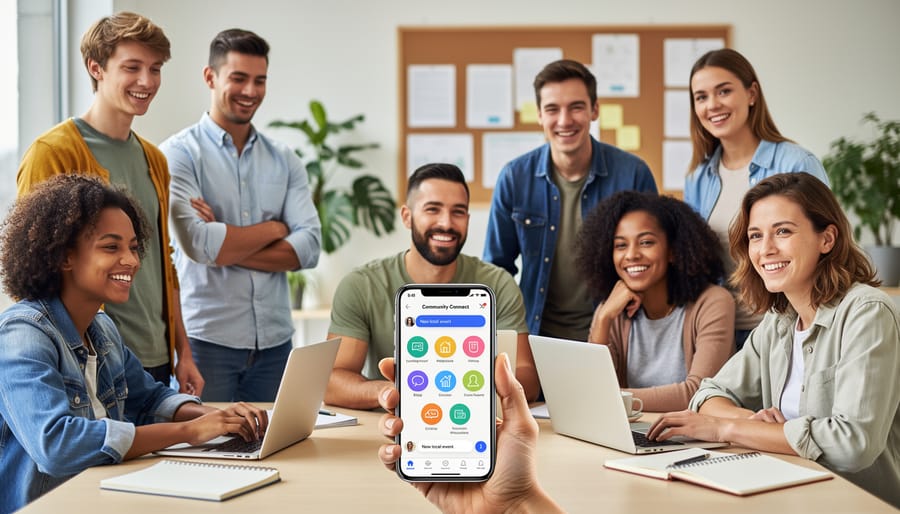
Building Community Through Stories and Reels
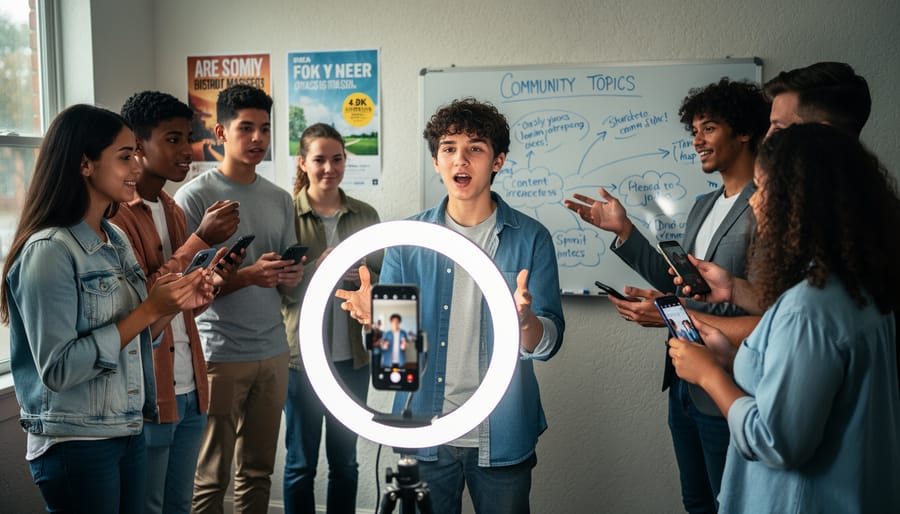
When a Toronto mosque needed volunteers for its winter clothing drive, eighteen-year-old Amira didn’t draft an email. She filmed a 30-second Reel showing last year’s impact, families receiving warm coats, children’s grateful faces, set to a trending audio clip. Within 48 hours, fifty volunteers signed up, triple the previous year’s turnout.
This is how Gen Z builds momentum. Visual storytelling transforms abstract asks into emotional connections. A static flyer about a youth mentorship program gets scrolled past; a series of Instagram Stories featuring real mentees sharing their experiences in their own words creates urgency and trust.
Short-form content succeeds because it mirrors how this generation processes information: quickly, visually, and authentically. When young Muslims share day-in-the-life content about volunteering at food banks or document Ramadan preparations through TikTok series, they’re not just posting, they’re creating entry points for participation. These aren’t polished marketing campaigns. They’re peer invitations.
The format matters less than the feeling. Whether through Reels showing how a community gathers for iftar or carousel posts breaking down voter registration steps, Gen Z demonstrates that engagement starts with relatability, not formality.
The Role of Group Chats and Private Communities
While Gen Z’s public social media presence captures attention, much of their actual community organizing happens behind the scenes in private digital spaces. WhatsApp groups serve as command centers for volunteer coordination, where youth leaders quickly assemble teams for food drives, event setup, or outreach initiatives. One Toronto community organizer notes that their weekend youth program runs entirely through a WhatsApp group, where parents receive updates, kids share photos, and volunteers coordinate logistics, all without a single email.
Discord servers have emerged as particularly powerful tools for sustained community building. Unlike ephemeral social feeds, these structured spaces allow for topic-specific channels: one for Qur’an study, another for gaming nights, a third for mental health support. Young Canadian Muslims create servers where newcomers find mentorship, converts ask questions without judgment, and friends maintain connections across provinces.
Private Instagram communities and close friends lists function as trusted circles where Gen Z Muslims share struggles, celebrate milestones, and seek advice on balancing faith with contemporary life. These intimate digital spaces foster vulnerability and authentic peer support that larger public forums cannot replicate. The WhatsApp communities for coordination model demonstrates how simple messaging platforms become sophisticated organizing tools when youth adapt them to community needs, proving that effective engagement doesn’t always require expensive platforms or technical complexity.
Authenticity Over Authority: A New Leadership Model
Gen Z approaches leadership with a fundamentally different lens: they value lived experience and transparency over titles and tenure. In Canadian Muslim communities, this translates to youth gravitating toward leaders who share their struggles openly rather than those who project infallibility from a podium.
Traditional community structures often rely on top-down communication, announcements from boards, sermons from appointed speakers, decisions made behind closed doors. Gen Z expects the opposite. They want to see the deliberation, understand the reasoning, and feel invited into the conversation. A community leader responding to comments on their Instagram post carries more weight than a formal statement issued through official channels.
This shift creates productive tension. Younger members question why certain voices dominate discussions about community priorities when those voices may not represent their realities as Canadian-born Muslims navigating intersecting identities. They ask why mosque boards lack age diversity, why youth programming decisions happen without youth input, and why communication flows one direction.
The most effective community leaders adapting to this moment embrace vulnerability. They acknowledge when they don’t have answers. They create space for dialogue rather than delivering monologues. A community organizer who shares behind-the-scenes challenges in a candid video story builds more trust than one who only broadcasts polished success narratives.
For Gen Z, authority must be earned through authenticity, not assumed through position. They respect leaders who listen more than lecture, who admit mistakes rather than defend them, and who treat community members as collaborators rather than constituents. This doesn’t mean abandoning organizational structure, it means reimagining how leadership shows up in daily communication. The communities thriving with Gen Z engagement are those where leaders have learned to speak with them, not at them.
Amplifying Underrepresented Voices
Gen Z’s digital-first approach has fundamentally shifted who gets heard in community discussions. Instagram Live sessions, TikTok responses, and Twitter threads require no committee approval or invitation to a board meeting, just a phone and something to say. This accessibility has opened channels for young women to speak about mental health, converts to share their navigation of cultural expectations, and newcomers to ask questions that might feel too basic for formal gatherings.
The impact on community representation runs deeper than individual voices gaining followers. When a 19-year-old hijabi in Calgary posts about discrimination she faced at work, hundreds of others comment with similar experiences, creating visible data about issues that rarely made it onto official agendas. When a recent immigrant uses Instagram Stories to explain confusion about Canadian Muslim cultural norms versus religious requirements, it sparks conversations that benefit entire cohorts of newcomers who stayed silent in traditional settings.
This democratization creates predictable tensions. Older community members sometimes view public airing of internal matters as inappropriate or damaging to the community’s image. Leaders accustomed to controlling messaging find themselves responding to narratives they didn’t shape. The speed of social media means a single post can force organizations to address sensitive topics, interfaith relationships, gender roles, political stances, before consensus forms among decision-makers.
Yet the opportunities outweigh the discomfort. Communities that actively create space for these emerging voices report stronger youth retention and more innovative programming. A Vancouver mosque launched its first mental health support group after persistent TikTok content from young members made ignoring the need impossible. An Ottawa organization revised its marriage prep course when Instagram polls revealed generational gaps in expectations. The key lies in treating these digital conversations as valuable feedback rather than threats to established order.
Bridging Generational Communication Gaps

Effective intergenerational communication starts with recognizing that different age groups bring complementary strengths to community participation. Organizations that successfully engage all generations create parallel pathways rather than forcing everyone onto a single platform or abandoning established methods entirely.
A hybrid approach means maintaining the Friday bulletin and quarterly newsletter while also posting key announcements as Instagram stories or brief TikTok updates. One Ottawa mosque found success by having youth volunteers create 30-second video summaries of community meetings, posted within hours of adjournment. Attendance among members under 30 increased by 40 percent once they could catch up asynchronously on their phones.
The reverse works too. Several Toronto community organizations now print QR codes in their newsletters that link to video testimonials, program registrations, or youth-led initiatives. This simple bridge helps older members access digital content without requiring platform fluency, while teaching basic tech literacy organically.
Training matters more than technology. When community leaders learn why Gen Z prefers certain platforms and communication styles, they stop viewing these preferences as frivolous. Workshops where youth explain how they use Discord for volunteer coordination or why unpolished video feels more trustworthy than formatted emails build mutual understanding. Similarly, younger members gain appreciation for why some community elders prefer phone calls or why written records of decisions matter for institutional memory.
Intergenerational mentorship programs create natural communication bridges. Pairing tech-savvy youth with experienced board members produces relationships where both parties adapt their communication styles, learning from each other’s approaches. The youth board liaison who learns to present proposals formally gains professional skills, while the treasurer who starts sharing financial updates via voice notes on WhatsApp reaches members who never opened emailed PDFs.
The goal is not uniformity but translation between communication ecosystems.
Practical Strategies for Community Organizations
Community organizations can bridge the communication gap with Gen Z through deliberate, structured adaptation. Success lies not in abandoning traditional values but in expressing them through channels that resonate with younger members.
- Audit your current channels and identify where Gen Z is already active. Survey youth members about their preferred platforms rather than assuming.
- Designate a Gen Z liaison or youth advisory board with real decision-making input on messaging and program design, not token representation.
- Create visual content calendars that include short videos, story updates, and Reels alongside traditional announcements. A 30-second clip explaining a program will reach more young people than a paragraph in a newsletter.
- Establish private community spaces on platforms like Discord or WhatsApp where youth can discuss issues, coordinate volunteering, and provide peer support in their own voice.
- Train existing staff and volunteers on platform basics. Understanding how Stories work or why a TikTok lands differently than an email builds intergenerational fluency.
- Develop content guidelines that preserve religious and cultural values while allowing authentic, conversational tone. Gen Z can communicate Islamic principles without formal language.
Start small with pilot projects during high-engagement periods. Programs around Ramadan community habits or youth camps offer natural testing grounds for new communication approaches.
Measure engagement honestly. Track which formats drive actual participation in events, volunteering, and donations versus vanity metrics like follower counts. Adjust based on what connects your specific community to meaningful involvement.
Most importantly, position Gen Z members as collaborators rather than audiences. When young people co-create content and shape messaging, authenticity follows naturally. Their fluency in digital communication becomes an organizational asset rather than a generational divide to manage.
Common Questions About Gen Z Community Engagement
How can we maintain Islamic values while adopting Gen Z communication platforms?
Islamic principles of respect, truthfulness, and community care apply across all platforms. The medium changes, but values remain constant, encourage authentic dialogue, moderation in social media discussions, and content that reflects Islamic ethics of dignity and compassion.
Is Gen Z’s preference for digital interaction weakening in-person community bonds?
Digital spaces often strengthen rather than replace physical community when used intentionally. Many young Canadian Muslims use online platforms to coordinate in-person volunteering, study circles, and social events, treating digital tools as bridges to real-world connection.
What if older community members feel excluded by new communication methods?
Successful organizations use hybrid approaches: posting Instagram updates while maintaining email newsletters, live-streaming events for those who cannot attend, and inviting youth to help elders navigate platforms. The goal is expanding access, not replacing what works.
How do we address misinformation spread through Gen Z communication channels?
Empower youth with media literacy skills and establish trusted community voices on platforms where misinformation circulates. Responding quickly with clear, factual information in the same spaces where confusion spreads proves more effective than ignoring digital conversations.
These questions reflect genuine concerns from community leaders navigating generational shifts. The reality is that Gen Z’s communication methods present learning opportunities for entire communities. When organizations create space for intergenerational mentorship, where youth teach digital fluency while learning from elders’ wisdom and experience, they foster involvement across age groups rather than creating division. The most resilient communities recognize that adapting communication strategies does not mean abandoning tradition, but rather finding new vessels for timeless values of connection, service, and mutual support.
The evolution of Gen Z communication styles is not fragmenting Canadian Muslim communities, it is creating unprecedented opportunities for deeper, more inclusive engagement. When communities approach these shifts with curiosity rather than resistance, they unlock pathways to involve voices that traditional structures often missed: young women leading social campaigns, converts sharing their journeys through visual storytelling, and youth organizing volunteer efforts through digital platforms that fit their lives.
The most vibrant communities today are those embracing both-and solutions. They maintain cherished traditions like Friday gatherings and community dinners while also creating space for Instagram updates, Discord organizing channels, and TikTok storytelling. This is not about choosing between generations or methods; it is about expanding the table so more people can participate in ways that feel authentic to them.
As Canadian Muslim communities continue adapting, the real measure of success will be whether young people see themselves reflected in leadership, whether their preferred communication tools are welcomed alongside established ones, and whether their desire for transparency and dialogue strengthens rather than threatens community bonds. Gen Z is not asking communities to abandon their values, they are asking for permission to express those same values through their own voice. That is an invitation worth accepting.