
Community involvement transforms how Muslim Canadians experience life in this country. When Muslims actively participate in civic organizations, local government, volunteer groups, and neighborhood initiatives, they gain representation in decisions that affect their daily lives, build bridges with other communities, and create pathways for future generations to thrive. The method is straightforward: start where you are, contribute your unique perspective, and show up consistently.
Representation matters because policy decisions, resource allocation, and community programs reflect the voices present at the table. In 2026, Muslim Canadians remain underrepresented in many civic spaces despite making up a significant portion of the population in cities like Toronto, Montreal, and Vancouver. This gap means that concerns about prayer spaces in workplaces, cultural accommodations in schools, and community safety often go unaddressed until crises emerge.
The barriers are real but not insurmountable. Many newcomers and second-generation Canadians cite time constraints, unfamiliarity with Canadian civic systems, language concerns, or simply not knowing where to begin. Yet successful examples exist across the country: mosque-led food drives that partner with municipal programs, Muslim professionals joining school boards, youth organizing environmental cleanups, and interfaith councils addressing shared neighborhood issues.
Getting involved doesn’t require political expertise or perfect English. It requires genuine interest in your community’s wellbeing and willingness to learn alongside your neighbors. The following sections outline practical steps, highlight organizations already doing this work, and share stories from Muslims who found their place in Canadian civic life.
The Current State of Muslim Community Representation in Canada
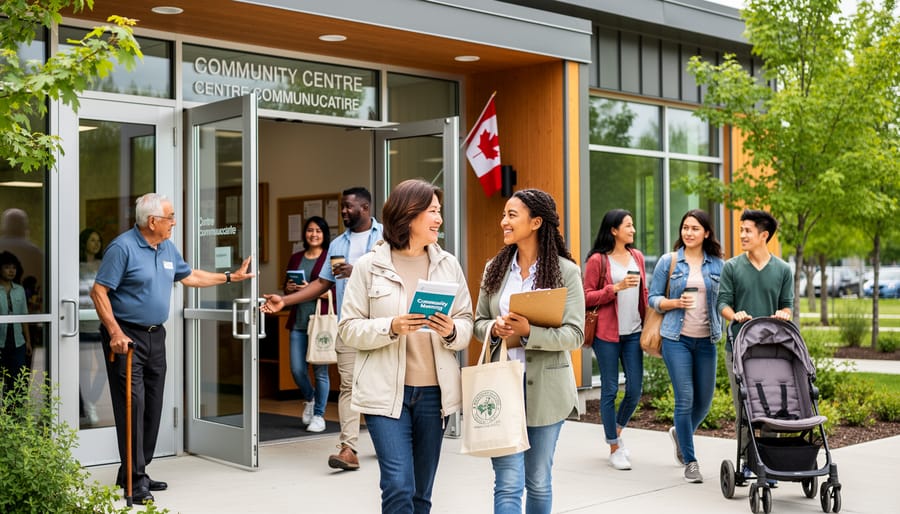
Muslim communities in Canada have experienced significant growth and diversification over the past two decades, yet their representation in leadership and civic spaces tells a complex story of both meaningful progress and persistent gaps.
As of 2026, Muslims comprise approximately 4.9% of Canada’s population, with projections suggesting continued growth through immigration and demographic shifts. This expanding presence has translated into some notable visibility gains. Muslim Canadians now hold seats in federal and provincial legislatures, serve as mayors in several municipalities, and occupy leadership positions in professional associations, educational institutions, and advocacy organizations. The 2019 federal election marked a watershed moment with 15 Muslim MPs elected, demonstrating that political participation has moved beyond symbolic tokenism toward substantive representation.
Beyond electoral politics, Muslim voices have become more prominent in media, academia, and civil society. Community leaders contribute regularly to national conversations about multiculturalism, religious accommodation, and social justice. Professional networks and advocacy groups have matured, creating platforms that amplify Muslim perspectives on issues ranging from education policy to economic development.
However, authentic representation remains uneven across sectors. Corporate boardrooms, senior judiciary positions, and certain professional fields still show significant underrepresentation relative to population demographics. Many Muslim Canadians, particularly women and recent immigrants, face barriers in translating educational credentials and community leadership experience into mainstream institutional roles. Visible representation often concentrates in specific regions like Toronto, Montreal, and Vancouver, while smaller cities see fewer Muslims in decision-making positions.
The gap between demographic presence and proportional representation reflects ongoing challenges: systemic barriers in hiring and advancement, lingering misconceptions about Muslim values and Canadian identity, and the reality that many community members focus energy on building internal institutions rather than engaging with broader civic structures.
Breaking Down Barriers to Community Involvement
Navigating Cultural Adjustment as New Immigrants
Newcomers often find themselves caught between two worlds when they first arrive in Canada. You want to preserve your cultural and religious identity while also building meaningful connections in your new home, but these goals can sometimes feel at odds with each other.
Language barriers create the most immediate obstacle. Even with English or French skills, the nuances of workplace communication, community meetings, and casual social interactions take time to master. You might hesitate to volunteer or speak up in public forums simply because you worry about being misunderstood or making mistakes.
Then there’s the uncertainty about how much cultural adaptation is expected. Will joining a neighborhood association mean compromising your values? Can you participate in school councils while maintaining your prayer schedule? These questions hold many newcomers back from taking that first step toward engagement.
The fear of judgment works both ways. You might worry about facing stereotypes or Islamophobia in certain spaces, while simultaneously concerned about criticism from within your own community for engaging too much with mainstream Canadian society. This double pressure creates a paralyzing effect that keeps talented, capable individuals on the sidelines.
Time constraints compound these challenges. Between establishing careers, managing households, and supporting families through major transitions, community involvement often feels like an unaffordable luxury rather than a pathway to belonging.
Overcoming Representation Gaps in Leadership Spaces
Muslim leaders remain notably absent from key decision-making tables across Canada, from corporate boardrooms to municipal councils. This gap stems from multiple overlapping factors rather than a single cause.
Many professional pathways in Canada prioritize networks built through years of local experience. Newer immigrants, even those with strong credentials, often lack the established connections that open doors to leadership roles. This creates a catch-22: you need visibility to gain opportunities, but you need opportunities to become visible.
Stereotyping plays a persistent role. Studies show that Muslim candidates for leadership positions face assumptions about their priorities, with some decision-makers questioning whether religious identity might conflict with professional judgment. These biases rarely get stated openly but influence hiring panels and nomination processes nonetheless.
Structural barriers matter too. Leadership positions frequently demand time commitments that clash with family responsibilities, affecting women disproportionately. Evening meetings during Ramadan or networking events centered around alcohol can signal, however unintentionally, that certain spaces were not designed with Muslim participation in mind.
The representation gap also feeds itself. Without visible Muslim leaders in an organization, aspiring candidates may not see themselves reflected in those roles or understand how to navigate the path forward.
How Community Organizations Drive Meaningful Participation
Youth as the Next Generation of Community Leaders
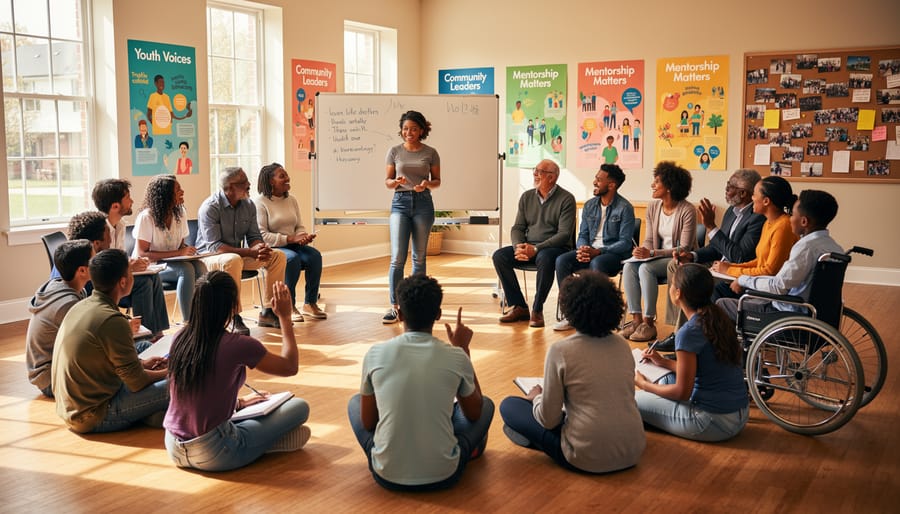
Youth programs specifically designed for young Muslims create environments where the next generation develops the confidence and skills to become effective community representatives. These programs recognize that young people growing up in Canada navigate two worlds simultaneously, and this dual perspective becomes their greatest strength rather than a source of conflict.
Leadership development happens through practical opportunities. Youth councils within community organizations give teenagers real decision-making responsibilities over event planning, budget allocation, and community outreach. Mentorship programs pair younger members with established community leaders who model how to advocate effectively while staying rooted in cultural values. Public speaking workshops, debate clubs, and youth-led initiatives build the communication skills essential for representation in any setting.
The most successful programs explicitly address identity integration rather than forcing young people to choose between being Canadian and maintaining cultural heritage. When youth see themselves reflected in program leaders who successfully bridge both identities, they gain living examples of how representation works in practice. This confidence translates directly into participation beyond the community itself.
Young Muslims who develop leadership skills through these programs become advocates in schools, workplaces, and civic spaces. They challenge misconceptions through authentic relationships, demonstrate the compatibility of Muslim values with Canadian citizenship, and create pathways for peers who might otherwise remain disengaged. Investing in youth leadership ensures communities have representatives who understand both integration challenges and the importance of cultural continuity.
Creating Safe Spaces for Dialogue and Growth
Community centers and mosques that understand cultural nuances become more than just meeting places, they transform into launching pads for civic participation. When newcomers walk into a space where staff speak their language, where prayer times are respected, and where questions about Canadian systems don’t feel awkward, the psychological barrier to engagement drops significantly.
These environments work because they eliminate the fear of being misunderstood or judged. A mother attending her first parent council meeting facilitated in both English and Urdu can focus on contributing ideas rather than worrying about comprehension. Young professionals exploring leadership workshops led by mentors who share similar backgrounds feel less isolated in their ambitions.
The most effective spaces strike a deliberate balance. They celebrate cultural identity through events and programs while simultaneously teaching practical Canadian civic skills, how local government works, how to advocate for community needs, how to navigate professional networks. This dual approach acknowledges that maintaining heritage and embracing Canadian civic life aren’t opposing forces.
Physical design matters too. Prayer rooms, halal food options at events, and gender-specific programming where appropriate signal that organizers have thought carefully about the community’s needs. When people feel genuinely seen and accommodated, they return. They bring others. They start volunteering. Safe spaces become growth spaces, and hesitant attendees evolve into confident participants ready to engage with broader Canadian society.
Real Stories of Community Impact and Success
Real representation comes alive through the stories of individuals and organizations who’ve transformed challenges into opportunities for meaningful change. These examples demonstrate how community involvement creates ripples that extend far beyond the initial effort.
In Toronto, a group of young Muslim professionals noticed their neighborhoods lacked culturally appropriate mental health resources. Rather than waiting for solutions, they launched a peer support network that connected community members with counselors who understood both Islamic values and Canadian healthcare systems. Within two years, the initiative served over 500 families and inspired similar programs in Vancouver and Montreal.
A Syrian refugee family in Edmonton turned their struggle with isolation into action by starting weekly community dinners that welcomed both newcomers and long-time Canadians. What began in their modest apartment grew into a registered nonprofit that now operates three community kitchens, teaching cooking skills while fostering cross-cultural friendships. Their model proved so successful that the city’s immigration services department adopted it as a template for integration programming.
Community representation also thrives in unexpected spaces. When Amina, a hijab-wearing engineer, joined her local school council, she initially faced skepticism. Her persistent advocacy for inclusive playground design resulted in prayer space accommodations during field trips and culturally diverse food options at school events, changes that benefited Muslim students while teaching the broader community about respectful accommodation.
These stories share common threads: they started with someone recognizing a need, took courage to step forward despite uncertainty, and created solutions that served both their community and Canadian society. Each success proved that authentic representation isn’t about grand gestures, it’s about showing up consistently, building trust through action, and demonstrating that Muslim Canadians actively contribute to strengthening the social fabric.
Practical Steps to Increase Your Own Community Involvement

Getting involved in your community doesn’t require grand gestures or years of experience. Whether you’ve just arrived in Canada or you’ve been here for decades, meaningful participation starts with small, intentional steps that match your interests and current capacity.
The key is to begin where you are, not where you think you should be. Many people delay involvement because they feel they need perfect English, extensive networks, or specialized knowledge. The reality is that communities need diverse contributions, and your unique perspective as a Muslim Canadian is itself valuable.
- Identify what genuinely interests you. Think beyond obligation to what energizes you. Are you drawn to youth mentorship, cultural preservation, interfaith dialogue, civic policy, or community services? Your involvement will be sustainable only if it connects to something you care about.
- Start with low-commitment exploration. Attend open community events, join online forums, or volunteer for single-day activities. This helps you understand different organizations’ cultures and missions without immediate pressure.
- Connect with established community members. Reach out to someone already involved in an area that interests you. Most people are happy to share their experiences and can provide practical advice about opportunities and how to navigate them.
- Offer specific skills or time blocks. Instead of vague offers to help, propose concrete contributions: “I can design social media graphics” or “I’m available Tuesday evenings to help with programming.” Specificity makes it easier for organizations to include you.
- Build confidence through consistency. Regular small contributions often lead to larger roles. Show up reliably for initial commitments, and opportunities will naturally expand as coordinators recognize your dependability.
Remember that involvement looks different for everyone. A working parent might contribute by hosting occasional gatherings at home, while a student might volunteer at weekend events. A professional could offer pro bono consulting, and a retiree might provide language support to newcomers.
Don’t overlook informal participation. Introducing a new neighbor to local services, organizing a potluck that brings diverse families together, or simply being the person who shows up consistently at community gatherings all strengthen the fabric of representation. These everyday actions create the foundation that makes formal leadership possible.
The most important step is the first one. Choose something achievable this week, whether that’s researching local organizations, attending one event, or having a conversation with someone already involved. Community engagement is a journey, not a destination, and every contribution matters in building stronger, more representative Muslim communities across Canada.
Community involvement and representation are far more than abstract ideals or checkboxes on a diversity agenda. They are the living threads that weave together the fabric of Canadian multiculturalism, strengthening it with every voice that chooses to speak up and every hand that reaches out to participate. When Muslim communities engage actively in civic life, leadership roles, and local initiatives, the benefits ripple outward. Newcomers find their footing faster. Misconceptions give way to understanding. Policies reflect lived experiences rather than assumptions. The entire social landscape becomes richer, more resilient, and genuinely reflective of the people it serves.
Your participation matters, whether you’re taking your first tentative steps into community engagement or you’ve been advocating for years. Start where you are. Volunteer at a local organization. Attend a town hall meeting. Share your perspective when decisions affect your neighbourhood. Mentor a young person navigating between cultures. Run for a position that needs your voice. These actions may feel small in isolation, but collectively they reshape the possibilities for everyone who comes after you.
The communities we build today become the foundation for the next generation. By showing up, speaking out, and contributing your unique perspective, you’re not just claiming your place at the table. You’re expanding it for others and proving that diverse voices don’t dilute Canadian identity. They define it.